 注: 建议图片大小150px*50px

丨
English
注: 建议图片大小150px*50px Views: 0 Author: Site Editor Publish Time: 2026-10-16 Origin: Site


Complete Guide to Faucet Finishes: How to Choose
the Right Color for Your Kitchen and Bathroom
CONSISTENT · PROFESSIONAL · INNOVATIVE · CUSTOMIZABLE
When renovating or building a kitchen or bathroom, most homeowners spend hours picking out countertops,
tile, and cabinetry — then treat the faucet as an afterthought. But here's the thing: the finish on your faucet does
more than just look pretty. It determines how often you'll be wiping down fingerprints, how well it holds up to harsh
cleaners, and whether it'll still look good a time from now.
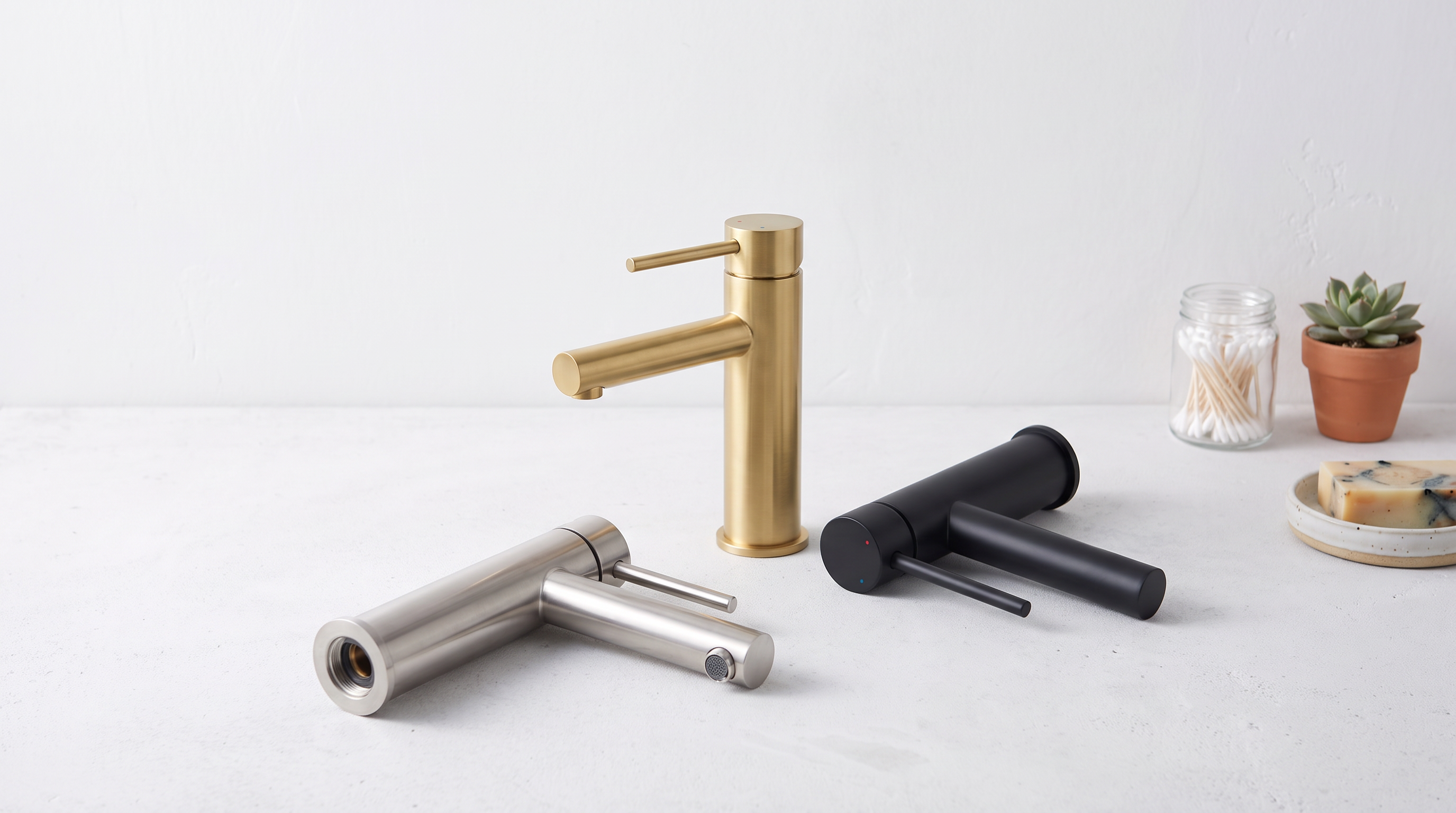
Gone are the days when polished chrome was your only option. Today, brushed nickel, matte black, brushed gold,
and oil-rubbed bronze open up a world of design possibilities. But with more choices come more questions.
Ø Which finish is actually durable?
Ø Can you mix metals?
Ø And does the kitchen need a different finish than the bathroom?
Let's break it all down.
Polished chrome delivers a bright, mirror-like shine that brightens smaller spaces.
Budget-friendly and widely available, it works for both modern and traditional interiors.
Simple soap and water handle routine cleaning.
Downside: Water spots and fingerprints show up easily;
frequent wiping is required. Fine scratches stand out on glossy surfaces.
Best for: Bathrooms, rental and commercial projects. Less ideal for high-use
kitchens where grease leaves visible marks.
Brushed nickel features a soft, muted silver-toned matte texture.
It hides watermarks and smudges far better than chrome. Versatile and durable,
it pairs beautifully with wood cabinetry, marble and stone surfaces for traditional or transitional decor.
Downside: It may look dim in low-light rooms. Avoid harsh acidic cleaners that can damage plating.
Best for: Primary bathrooms and moderately used kitchens.
Matte black remains a top trend for minimalist and industrial-style homes.
It creates striking contrast with light countertops, white sinks and subway tiles.
Critical note: not all matte black is equal. Low-cost powder-painted black chips and peels with daily contact.
Even PVD matte black can show soap scum or toothpaste residue.
Clean gently with microfiber cloth plus diluted vinegar; never use steel wool.
Best for: Bathrooms and design focused kitchens. Always select PVD quality for kitchen applications.
Oil-rubbed bronze offers deep antique brown-black tones ideal for country and traditional-style homes.
Minor scratches and water spots blend naturally with its aged patina.
Downside: Hot water gradually breaks down its protective oil layer, leading to uneven fading. Specialized cleaners are required.
Best for: Vintage-themed bathrooms. Not recommended for kitchens.
Kitchens deal with heavy grease, strong detergents and constant handling. Bathrooms struggle with limescale,
soap residue; guest bathrooms allow more creative styling.
| Space | Key Challenges | Top Finishes | Finishes to Avoid |
| Kitchen | Grease, harsh detergents, heavy daily use | Tohlar electroplated matte black, brushed nickel | Oil-rubbed bronze, cheap spray-painted black, low-grade gold plating |
| Primary Bathroom | Limescale, soap scum, frequent use | Brushed nickel, polished chrome, Tohlar electroplated matte black | Spray-painted finishes, low-grade gold plating |
| Space | Key Challenges | Top Finishes | Finishes to Avoid |
| Guest / Powder Room | Low traffic, design-driven | Tohlar PVD brushed gold, matte black, oil-rubbed bronze, brushed nickel | No strict restrictions |
Insight:
Kitchen finishes must withstand heavy abuse.
Main bathrooms prioritize hiding water marks.
Powder rooms give freedom to pick statement-making styles.
· Modern Minimalist / Industrial: Electroplated Matte Black, Polished Chrome. Pair with flat-panel cabinetry and dark hardware.
· Traditional / Country Rustic: Brushed nickel, Oil-rubbed bronze. Combine with wood furniture and subway tiles.
· Transitional: Brushed nickel, Brushed gold. Complements White, Grey or navy cabinetry.
· Luxury: PVD brushed gold. Elevate spaces with marble and white tile.
Mixed-metal styling is popular, yet easy to get wrong:
1. Choose one dominant finish (e.g. faucet), use a second metal only as accents for handles, towel bars or lighting.
2. Stick to maximum two metal tones per room.
3. Repeat each finish at least twice in the space so it feels intentional.
4. Check physical samples in real lighting. Online photos often misrepresent tone and sheen.
Important: Do not mix polished chrome and brushed nickel. Though both silver-toned, their gloss difference creates visual conflict.
1. Use only microfiber cloths. Steel wool and rough sponges scratch all finishes, including PVD and premium electroplating.
2. Start cleaning with mild soap and water. Diluted vinegar works for limescale.
3. Keep bleach and strong acid cleaners away from gold, bronze and black finishes.
4. Wipe faucets dry after use to reduce water-spot build-up.
Note: Even premium finishes are not 100% scratch-proof. Sharp objects will still cause surface damage.
· Kitchen faucet: For bold black styling, select Matte black, alternatives. Brushed Nickel is another solid pick.
· Primary bathroom: Brushed nickel for low-maintenance; Polished Chrome for budget; Matte Black for modern aesthetics.
· Powder room: Experiment freely. PVD Brushed Gold, Matte Black or Oil-rubbed Bronze all work well for low-usage spaces.
· Key purchasing rule: Confirm surface treatment.
· PVD (Brushed gold): Molecular-level bonding, excellent scratch & corrosion resistance, long-lasting colour.
· Quality electroplating (Matte black): Better performance than spray paint, yet less wear-resistant than PVD.
· Spray paint: Low-cost, prone to chipping and peeling.
Your faucet gets touched multiple times every day. Selecting the right finish balances decor, daily-life practicality and long-term value. Beyond standard selections,
Tohlar provides customisable faucet styles and finish solutions, tailored to fit varied kitchen and bathroom design visions for residential or commercial projects.
Understand what sits beneath that surface color, and you avoid the frustration of chipping, fading or spotty fixtures down the line.


